Bathing
Suits / Swimsuits
- Where did swimwear originate from?
- How has swimwear changed in style?
Did
you know that in the 18th Century or early 1800s, people started to roam
the beaches at the start of the new railroads. The women at the time needed a swimsuit for when the train would take them to the beach, a long beach dress equipped with weights in the hem would prevent the dress from riding up. However, this Victorian-era suit soon went
through some changes in its functionality. The early 1800s marked the importance of
swimwear on society.
Approximately between
1850 – 1870, bathing suits covered most of the body. The
typical swimsuit of this time was long bloomers that were made from heavy flannel and
other weighty fabrics that weighed down the swimmer.
By the 1890 – 1899, swimwear
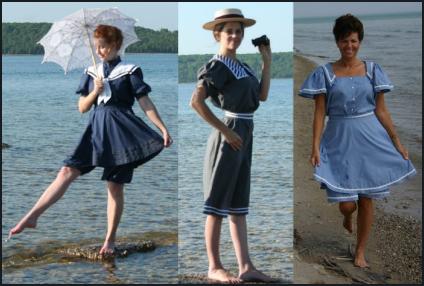
had changed somewhat from the early prototypes. According to one article I came across, "Women typically dressed in black,
knee-length, puffed-sleeve wool dresses, usually featuring a sailor collar,
which was worn over bloomers trimmed with ribbons and bows. The bathing suit
was typically accessorized with long black stockings, lace-up bathing slippers,
and fancy caps." The 1890s is when sun hats became popular, too.
In the beginning of
the 20th Century gender roles started to take a turn. Women stopped being arrested
for showing their legs and shoulders at the beach. What mostly changed was that
women started to swim, really swim. At this time, swimming became a competitive
sport and allowed women to participate in it, both in school and recreational.
For this reason, the bathing suit became more functional. It was still made of
wool, but was a lot smaller. A typical bathing suit in the early 1900s was a
one-piece tank style jumper that ended at the thigh and was tight enough to
allow real movement in the water. It was not considered sexy by any means, but
looked especially good on girls with boyish figures.
By the early mid
1930’s, swimwear started to look like the swimsuits we know today. The 1930s
swimsuit was body hugging and made of swim friendly fabric such as latex. The
suit showed a lot of skin, like bare arms and legs. In the 1940s,
the 1930s suit was cut to show some more skin, a few inches above the belly
button.
The
bikini was so ground-breaking of its time that many models, even French models that
were known to tryout many fashion trends, didn’t want to model the bikini. The
bikini showed off the naval, which was a part of the body that had never been
exposed in clothing before, and something a decent girl would never show/wear.
The 1950s most ideal
body was a curvy one. Swimsuits of this decade introduced more structure with built
in support. The one-piece had a built-in corset, which flatten the tummy. A pinch in the waist, made the bust appear more
supported. This provided security while in the water. Also, the suits had low
legs that were unflattering according to women. However it was modest for sunbathing, especially in the company of males.
The bikini was
very shocking in the 1940s. Bikinis became extremely popular in the 1960s.
It was common to see young girls wearing bikinis at the beach or near pools. Bikinis of this time are considered modest compared to today’s styles and the fabrics
covered as much as possible. The mid-60s is when bikinis became more
revealing due to its material, lycra/spandex.
As we got closer to
the 1970’s, swimsuits became less and less fabric. The
70s bathing suit was definitely more high-cut than the 60s version, but less
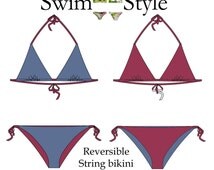
drastic than the 80s bathing suits, and string bikinis made their first
appearance during the 70s. The 80s was the decade that shielded away from the
bikini. However, the bathing suits were still revealing as they had a high leg
line and a low neck line and a scooped back, revealing as much skin as possible
for a one-piece.
Just when you thought
bathing suits couldn’t get any skimpier, they did! Especially in the 1990s. People
were not worried about covering up, butt coverage was reduced and the
“side-boob” was introduced. Brazilian beachwear was brought into America and so
was other Brazilian customs. The small covering of bathing suits of this decade
brought into question the difference between covering up a little area of the
body versus going completely nude. Today one will find all the various types of
bathing suits ranging from one pieces to bikinis, to even monokinis (cut-out
one pieces). They come in all different patterns and cuts and are made of
different materials too, even metal and beading details.


Sources:
"History of Bathing Suits." History of Bathing Suits. Victoriana Magazine, n.d. Web. 06 May 2016.

No comments:
Post a Comment