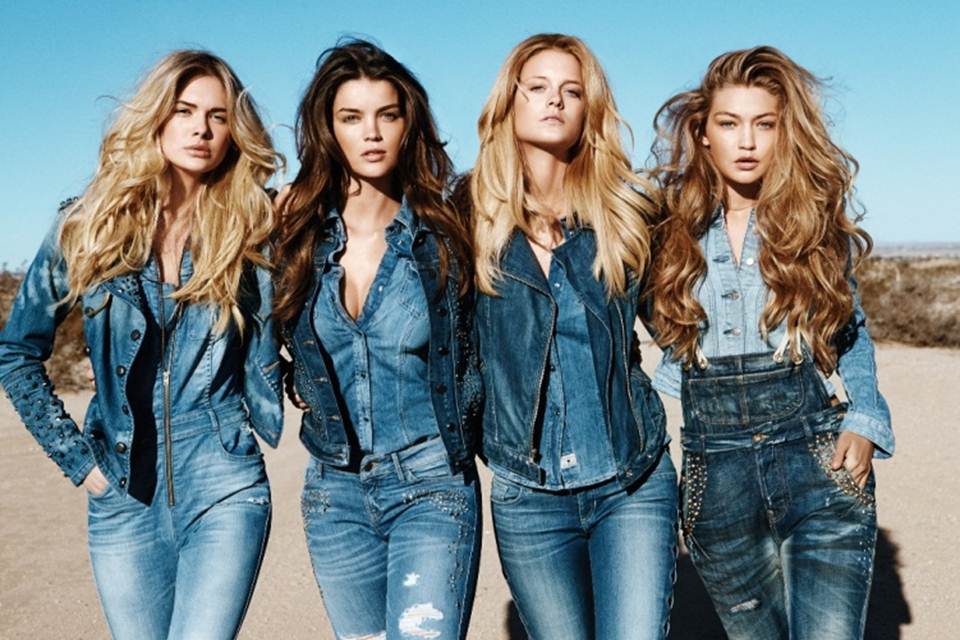
In honor of National Denim Day, I decided to dedicate this blog to it. On Wednesday, 27
April 2016, it was National Denim Day. It is considered National Denim Day in honor of Sexual Violence Awareness Month. National Denim Day was introduced after a ruling by the Italian Supreme Court where a rape conviction was overturned because the justices felt that since the victim was wearing tight jeans she must have helped her rapist remove her jeans, thereby implying consent. The next day, the women in the Italian Parliament came to work wearing jeans in solidarity with the victim. Since this incident, wearing jeans on Denim Day has become a symbol of protest against erroneous and destructive attitudes about sexual assault. I guess you can say denim not only looks good but also stands for a serious purpose.
The history behind Denim goes back to the 17th century to present times. Denim has been considered one of the world’s oldest fabrics and has been used for many things not only for clothing and jeans but for its durability. Denim can be found in many places including museums, household furniture, and to awnings. In fact, 501 jeans are the most traditional pair of pants in this generation. Levi Strauss was named the founder of the Denim Jeans. Around 1873 Levi Strauss began to make copper riveted “waist overalls (which is the old name for jeans) out of brown cotton duck and blue denim. Levi and Co. had a huge part in the United States society especially during 1930s – 1970s. Originally, denim jeans were intended as work attire, but teenagers in the 1950s made them popular casual clothing. In 1970, people really started personalizing bell bottoms with flower patterns, abstract embroidery, studs, and graffiti. Jeans were very popular among the hippies during this time. As the years progressed, jeans have turned into cut off shorts, skirts, and even duffle bags. In the 1980s, ripped, colored, and faded jeans were in style. Black jeans ruled the early 90s. Nowadays, designers are adding rhinestones, fur, and feathers. Denim can be used to make shoes, jewelry, jackets, dresses, bags, and more. In today’s era – denim is the style and the fabric is very comfortable, you can either dress it up or dress it down!
Sources:
https://zady.com/features/the-history-of-denim "The History of Demin." Zady. N.p., 16 Apr. 2014. Web. 29 April 2016.
www.historyofjeans.com/ "History of Jeans and Denim." History of Jeans. History of Jeans, n.d. Web. 29 April 2016.
What fashion accessories does Spring bring for us? As I browsed the internet and read several fashion magazines, I learned the latest trends starting with the shoe lines from flats to black heels. Shoes that could be worn with cute spring dresses or a formal prom dress. My favorite style for Spring 2016 would be the sandals with the Gladiator appeal. To start the season, a comfortable block heel would rule walking down the street. Platforms make a statement this season. Shoe Designers were able to bring us the latest styles this Spring, starting from flip flops, to flats, to rope lace pumps, to your high sleek sexy heels. Come on LADIES! Prom is just around the corner. Some of the style have a Gladiator look to them.
To think in the late BC’s, Sandals were the most common footwear in most early civilizations, however, a few early cultures had shoes. Approximately around 1600-1200 BC a soft texture shoe was worn by the mountain people who lived on the border of Iran. The soft shoe was made of wrap-around leather, similar to a moccasin. As late as 1850, most shoes were made on absolutely straight lasts, there being no difference between the right and the left shoe.
I guess shoes themselves have come a long way! You see, Jan Matzeliger, developed an “automatic method for lasting shoes and made the mass production of affordable shoes possible. As, Lyman Blake, an American inventor, invented a sewing machine for sewing the soles of shoes to the uppers and now, we come all this way and this is what we have created and designed over 2000 years later.
The next trend for the season is jewelry. Big bold shoulder length earrings are a yes please in the fashion world right now. Some designers known to design beautiful-looking earrings are Alexander Wang, Prada, Marni, Dolce & Gabbana, and Oscar de la Renta. Stylish bangles level out colorful patterns. Pendants are also in this season. Spring colors, being pastels, have a definite say in the way an article of clothing, shoe style, etc. will look. So, to take the edge off a solid color, by adding a scarf in a pastel color. It will surely lighten the mood and give off a sophisticated vibe. There is no need to hide your scarves in the closet. Linen, cotton, and silk will be your outfits best companion and keep it in posh shape. Scarves are the new necklaces for spring.
Fashion designers are always trying to find the most weirdest and original ways to get the public's attention through clothes during fashion week. One way they do get our attention is by making crazy avant-garde looking outfits, but why is that? Don't they know that people will most likely not wear them out on the streets, unless they are either Katy Perry or Lady Gaga? In doing research, I found out that runway clothes are pieces of art that demonstrate a designer's central theme or trend they are trying to get across. They are what you call a FASHION STATEMENT! The outfits that the models wear are not necessarily meant to be worn on a regular basis, but merely give a preview as to what trends are yet to come. Usually, only bits and pieces of the material are used in clothes that will be normal for us to wear. For instance, flavors for the season were avocado and orange, so fashion designers decided to style their clothing in the color and shape of these produce items. Upon further research, I found out that six graduates from the Royal Academy of Fine Arts called the Antwerp Six were the first people to bring a form of radical, unusual views of aesthetics to the fashion world in the start of the 1980s. Since then, fashion designers use different styles, patterns, prints, and fabrics to make all those crazy pieces of clothing we see on the runways. However, in order to show off the designer's masterpieces, runways have to be created. Runways began in 1943, when a fashion publicist named Eleanor Lambert organized an event called "Press week". Her goal was to give editors the opportunity to see and write about the works of American designers. This event allowed designers to finally receive the credit they deserved instead of staying behind the scenes and it opened doors of praise toward American styles. Some examples of fashion runway trends are the "Chainsaw Tulle" where parts of the skirt are cut out by a chainsaw. Fashion week 2008 featured Pac-Man helmets, and a Wizard of Oz inspired collection. Milan's Fashion Week also had outfits "Made of Cards", and a recent event showcased T Alexander McQueen's 10-inch stiletto boots. Another reason why flamboyant clothes are strutted on the runway is because they are entertaining to see and they provide conversation rather than a simple t-shirt and jeans.
Fashion is life. It expresses individuals personalities through clothing and accessories. You can go from looking raunchy to high class in a just minutes. I started and chose this blog because it is something I like talking about. I see things in magazines and then I like to either give it a thumbs up or critique it and give it style! I have such a strong passion for fashion that I have subscriptions to (Teen)Vogue, Glamour, Allure, and In Style to let me know about the in's and out's of today's fashion world. I am also interested in learning more about fashion, like where it came from, why do we dress the way we do, has it changed drastically, and more. Sometimes, I wish if I can travel back in time to each decade, just to try on all the outfits that were in style back then.
Any who, here are a couple of other websites/magazines that have a great sense of style.
Harper's Bazaar
Elle
Marie Claire
Nylon
Seventeen
Cosmopolitan
Where did Fashion originate?
Source: History of American Fashion Summary & Analysis Shmoop Editorial Team. "History of American Fashion Summary & Analysis." Shmoop.com. Shmoop University, Inc., 11 Nov. 2008. Web. 19 April 2016. http://www.shmoop.com/history-american-fashion/summary.html
Fashion began when the English settlers came to the American shores with their styles. Settlers started adapting to the style of Native Americans such as their moccasin footwear, deerskin, and leather attire. From there, southerners began using cotton to make linen shirts. I learned that there is no one exact place where fashion began, it has simply made its way through the world by inspiration and experimenting from other styles.
How has fashion evolved from 1910 to today's era? Source: Over Seventy Years of Fashion "Clothes And Fashion Styles Prices, Examples." Fashions and Clothes Styles from 50 Years What Do You Remember. N.p., n.d. Web. 19 April 2016. http://www.thepeoplehistory.com/fashions.html
What I found doing my research was that back in the 1910 women were still in the cover me up zone. They wore long sleeve dresses with long slim skirts, called tea gowns. Toward the end of the 1910s, V- necks were starting to become popular and fuller skirts were considered to be more casual. From the 1920s to the 1990s, the fashion style was based off the mood of the decade and showcased changes in society as the styles and accessories evolved overtime. We can still say that it is the same now as well. Our trends are either wildly new or our generation is bringing back trends such as choker necklaces, timberlands, crop tops, boot cut jeans, high-waist shorts and pants, and overalls among others. Dramatic changes in the 1920s were among the skirts and dresses. Hats and gloves were very much in style. The boyish look was coming around more. Fashion designers experimented with brighter, lighter colors, textures, and patterns. Evening wear was trimmed with fur. Silk and Rayon were the trendiest among this decade.
The 1930s are an inspiration to today's vintage look. Trends emphasized the waistline. Matching sets showed sophistication and a polished daytime look. Pumps, sling-back heels, and peep toes were the popular type of footwear. Since it was the start of the Depression, vibrant colors were not tasteful for the moment, so greys, beige, browns, and light colors appeared. Jackets and suits were added with shoulder pads. Men wore tapered trousers while young men wore a more flowing type. Zippers became the alternative to buttons. In the 1940s, the style was comfort and glamour. There were specific outfits for the time of day. Although, men still continued to wear suits. Animal skins took over such as in purses, collars, and sleeves. Bright colors came back. Clothing was produced after the rations of the war. Blouses also had shoulder padding. Pants became popular for women. Teenage girls wore sweaters, bobby socks, and knee-length skirts.
The 1950s clothing reflected the renewed postwar of America. At the Kentucky Derby, one would have most likely viewed well-dressed women in chic suits, with skirts that were either fitted to the body or billowed outward with the assistance of a petticoat. Again, gloves and hats were still quite popular and still a part of a well-dressed woman’s wardrobe. The 1950s were sleek, elegance, and sophistication. White and ivory jackets were popular among men. Vests were considered appropriate business attire. Men always wore hats too.
By the 1960s hat and gloves were out of style and patterns and prints were in. The brighter the better!
http://www.retrowaste.com/1960s/fashion-in-the-1960s/ Psychedelic, tie-dye shirts and long hair and beards was the trendy fashion during that time. Women wore super duper short skirts and men wore tunics and capes. Pants became tighter. Wearing scarves became common. The '60s was all about ladylike femininity. There was a polo style that is still around today.
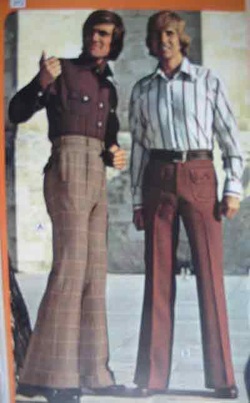
In the 1970s, polyester was everywhere. Women were wearing high-cut boots and low-cut pants. Pant suits, leisure suits, and track suits was one thing everyone had, as well as cowl neck sweaters, and V-neck striped shirts. Tunics and robes became popular. Chest hair, medallions, butterfly collars, bell bottoms, skin-tight t-shirts, sandals, flower patterned dress shirts, sideburns and, tennis headbands was the tubular style of the '70s. In the 1980s long skirts were coming back in. Women's dresses had a 1950s look. There was a lot of browns, tans, and oranges. Tennis player outfits were cool! Velour and velvet were huge in this decade. Waistlines were even higher. Sunglasses, hoop earrings, pearls, and bangles were a MUST HAVE! Teenagers styled their hair teased, wore bright crazy makeup, and a ton of neon. Due to Nike becoming one of the biggest clothing companies, athletic wear entered the fashion world. Women's clothing got baggier.
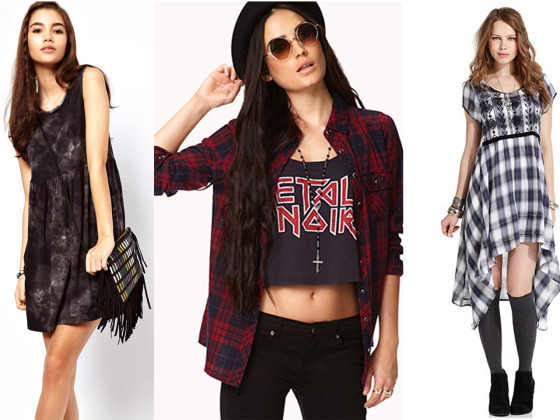
The 1990s was all about loose fitted clothes or a grungy kind of style. Baseball caps and tapered pants were a big deal. Sweaters had turtlenecks. Mullets were one of many popular hairstyles of the time. Flannels and holey jeans were popular amongst the grunge scene. Hip hop and urban style was very mainstream.
Military styles made their way into fashion by the anti-war protestors wearing camouflage pants. Looking rich and wearing top brands were back in. Teenager fashion in the 1990s was inspired by musicians. All a kid had to do was turn on MTV to get the latest styles.
Now, the 2000s is a combination of old and new trends. Athletic clothes expanded to Adidas, Pumas, New Balance and more. Retro culture has been a big influence on fashion. Hoodies, television shows/movie t-shirts, vintage, skinny jeans were common. One outfit became very popular- black leather jacket, white t-shirt, and jeans. V-neck sweaters were in. In the early 2000s, denim was major. Ponchos and sweat pants were also popular. At one point, most people were rocking a pair of Capri pants. The 2000s has such a variety of clothes and different styles that people can choose from any decade and still look cool. http://www.altiusdirectory.com/Lifestyle/2000-fashion.html
Sources:
"Fashion in the 1960s." RetroWaste. N.p., n.d. Web. 19 April 2016.
"The 70s Disco Fashion 1970s Costume History." 70s Disco Fashion, Mini Dress, Maxi, Platform Soled Shoes. N.p., n.d. Web. 19 April 2016.
"2000s in Fashion." 2000s in Fashion, Trends, 2000s Fashion Hair Styles, 2000s Men-s Clothing, Women-s Clothing. N.p., n.d. Web. 19 April 2016.




.jpg)