Fashion
Forward
Fashion is life. It expresses individuals personalities through clothing and accessories. You can go from looking raunchy to high class in a just minutes. I started and chose this blog because it is something I like talking about. I see things in magazines and then I like to either give it a thumbs up or critique it and give it style! I have such a strong passion for fashion that I have subscriptions to (Teen)Vogue, Glamour, Allure, and In Style to let me know about the in's and out's of today's fashion world. I am also interested in learning more about fashion, like where it came from, why do we dress the way we do, has it changed drastically, and more. Sometimes, I wish if I can travel back in time to each decade, just to try on all the outfits that were in style back then.
- Harper's Bazaar
- Elle
- Marie Claire
- Nylon
- Seventeen
- Cosmopolitan
Where did Fashion originate?
Source: History of American Fashion Summary & Analysis
Shmoop Editorial Team. "History of American Fashion Summary & Analysis." Shmoop.com. Shmoop University, Inc., 11 Nov. 2008. Web. 19 April 2016.
http://www.shmoop.com/history-american-fashion/summary.html
Shmoop Editorial Team. "History of American Fashion Summary & Analysis." Shmoop.com. Shmoop University, Inc., 11 Nov. 2008. Web. 19 April 2016.
http://www.shmoop.com/history-american-fashion/summary.html
Fashion began when the English settlers came to the American shores with their styles. Settlers started adapting to the style of Native Americans such as their moccasin footwear, deerskin, and leather attire. From there, southerners began using cotton to make linen shirts. I learned that there is no one exact place where fashion began, it has simply made its way through the world by inspiration and experimenting from other styles.

How has fashion evolved from 1910 to today's era?
Source: Over Seventy Years of Fashion
"Clothes And Fashion Styles Prices, Examples." Fashions and Clothes Styles from 50 Years What Do You Remember. N.p., n.d. Web. 19 April 2016.
http://www.thepeoplehistory.com/fashions.html
Source: Over Seventy Years of Fashion
"Clothes And Fashion Styles Prices, Examples." Fashions and Clothes Styles from 50 Years What Do You Remember. N.p., n.d. Web. 19 April 2016.
http://www.thepeoplehistory.com/fashions.html
What I found doing my research was that back in the 1910 women were still in the cover me up zone. They wore long sleeve dresses with long slim skirts, called tea gowns. Toward the end of the 1910s, V- necks were starting to become popular and fuller skirts were considered to be more casual. From the 1920s to the 1990s, the fashion style was based off the mood of the decade and showcased changes in society as the styles and accessories evolved overtime. We can still say that it is the same now as well. Our trends are either wildly new or our generation is bringing back trends such as choker necklaces, timberlands, crop tops, boot cut jeans, high-waist shorts and pants, and overalls among others. Dramatic changes in the 1920s were among the skirts and dresses. Hats and gloves were very much in style. The boyish look was coming around more. Fashion designers experimented with brighter, lighter colors, textures, and patterns. Evening wear was trimmed with fur. Silk and Rayon were the trendiest among this decade.
The 1930s are an inspiration to today's vintage look. Trends emphasized the waistline. Matching sets showed sophistication and a polished daytime look. Pumps, sling-back heels, and peep toes were the popular type of footwear. Since it was the start of the Depression, vibrant colors were not tasteful for the moment, so greys, beige, browns, and light colors appeared. Jackets and suits were added with shoulder pads. Men wore tapered trousers while young men wore a more flowing type. Zippers became the alternative to buttons. In the 1940s, the style was comfort and glamour. There were specific outfits for the time of day. Although, men still continued to wear suits. Animal skins took over such as in purses, collars, and sleeves. Bright colors came back. Clothing was produced after the rations of the war. Blouses also had shoulder padding. Pants became popular for women. Teenage girls wore sweaters, bobby socks, and knee-length skirts.


The 1950s clothing reflected the renewed postwar of America. At the Kentucky Derby, one would have most likely viewed well-dressed women in chic suits, with skirts that were either fitted to the body or billowed outward with the assistance of a petticoat. Again, gloves and hats were still quite popular and still a part of a well-dressed woman’s wardrobe. The 1950s were sleek, elegance, and sophistication. White and ivory jackets were popular among men. Vests were considered appropriate business attire. Men always wore hats too.


By the 1960s hat and gloves were out of style and patterns and prints were in. The brighter the better!
http://www.retrowaste.com/1960s/fashion-in-the-1960s/ Psychedelic, tie-dye shirts and long hair and beards was the trendy fashion during that time. Women wore super duper short skirts and men wore tunics and capes. Pants became tighter. Wearing scarves became common. The '60s was all about ladylike femininity. There was a polo style that is still around today.

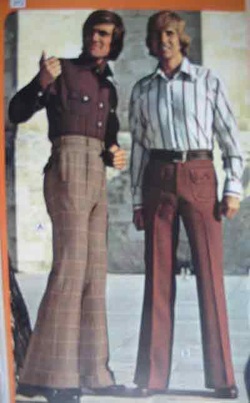

In the 1970s, polyester was everywhere. Women were wearing high-cut boots and low-cut pants. Pant suits, leisure suits, and track suits was one thing everyone had, as well as cowl neck sweaters, and V-neck striped shirts. Tunics and robes became popular. Chest hair, medallions, butterfly collars, bell bottoms, skin-tight t-shirts, sandals, flower patterned dress shirts, sideburns and, tennis headbands was the tubular style of the '70s. In the 1980s long skirts were coming back in. Women's dresses had a 1950s look. There was a lot of browns, tans, and oranges. Tennis player outfits were cool! Velour and velvet were huge in this decade. Waistlines were even higher. Sunglasses, hoop earrings, pearls, and bangles were a MUST HAVE! Teenagers styled their hair teased, wore bright crazy makeup, and a ton of neon. Due to Nike becoming one of the biggest clothing companies, athletic wear entered the fashion world. Women's clothing got baggier.
.jpg)


The 1990s was all about loose fitted clothes or a grungy kind of style. Baseball caps and tapered pants were a big deal. Sweaters had turtlenecks. Mullets were one of many popular hairstyles of the time. Flannels and holey jeans were popular amongst the grunge scene. Hip hop and urban style was very mainstream.
Military styles made their way into fashion by the anti-war protestors wearing camouflage pants. Looking rich and wearing top brands were back in. Teenager fashion in the 1990s was inspired by musicians. All a kid had to do was turn on MTV to get the latest styles.


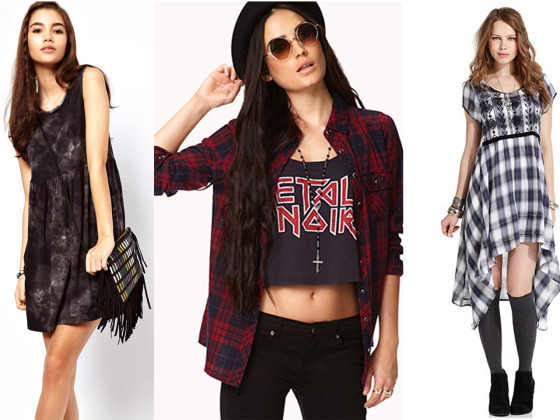
Now, the 2000s is a combination of old and new trends. Athletic clothes expanded to Adidas, Pumas, New Balance and more. Retro culture has been a big influence on fashion. Hoodies, television shows/movie t-shirts, vintage, skinny jeans were common. One outfit became very popular- black leather jacket, white t-shirt, and jeans. V-neck sweaters were in. In the early 2000s, denim was major. Ponchos and sweat pants were also popular. At one point, most people were rocking a pair of Capri pants. The 2000s has such a variety of clothes and different styles that people can choose from any decade and still look cool. http://www.altiusdirectory.com/Lifestyle/2000-fashion.html


Sources:
"Fashion in the 1960s." RetroWaste. N.p., n.d. Web. 19 April 2016.
"The 70s Disco Fashion 1970s Costume History." 70s Disco Fashion, Mini Dress, Maxi, Platform Soled Shoes. N.p., n.d. Web. 19 April 2016.
"2000s in Fashion." 2000s in Fashion, Trends, 2000s Fashion Hair Styles, 2000s Men-s Clothing, Women-s Clothing. N.p., n.d. Web. 19 April 2016.

No comments:
Post a Comment